

April 13, 2026
Introduction
Morocco is a year-round destination, but not all months are equal — particularly when the Sahara Desert is part of your itinerary. The difference between visiting in October versus July, or March versus January, affects everything from comfort and photography to crowd levels and road conditions.
This guide breaks down every month of the year so you can choose the perfect time for your Morocco desert tour.
Quick Summary: The Best Months at a Glance
| Season | Months | Desert Temp (Day/Night) | Verdict |
|---|---|---|---|
| Peak season | March–May | 25–35°C / 12–18°C | Excellent |
| Shoulder (autumn) | Sept–Nov | 28–38°C / 10–18°C | Excellent |
| Winter | Dec–Feb | 15–22°C / 2–8°C | Good (cold nights) |
| Summer | June–Aug | 38–48°C / 20–25°C | Challenging |
Month-by-Month Breakdown
January
Cold but magical. Atlas mountain passes may have snow (making the Tizi n’Tichka drive spectacular but occasionally closed in heavy snowfall). Desert days are mild and pleasant (15–20°C); desert nights are cold (3–7°C) — bring serious warm layers. Crowds are minimal. The Fes medina and southern valleys are quiet and photogenic. A great month for travelers who prefer solitude over warmth.
February
Similar to January but warming slightly toward the end of the month. The Valley of Roses begins to show early almond blossom. Desert conditions are ideal for walking. Still cold at night in the mountains and desert — warm layers essential.
March
One of the best months for a Morocco desert tour. Temperatures are warming throughout the south; the High Atlas Mountains are snow-capped and dramatic; the Dades and Draa valleys are green from winter rains; and the desert days are perfect (24–28°C) with comfortable nights (12–16°C). Crowds are beginning to build but haven’t yet reached peak levels.
April
Excellent. Spring in full effect — wildflowers on the mountain passes, almond and walnut trees in blossom along the valley roads, and the Valley of Roses at or approaching its annual bloom (usually mid-April to early May). Desert temperatures are ideal. One of the most beautiful months to drive the southern Morocco circuit.
May
The Rose Festival in Kelaat M’Gouna (Valley of Roses) takes place in early May — a vibrant celebration of the damask rose harvest with music, parades, and markets that’s well worth timing your visit around. Later in May, temperatures in the desert start climbing toward summer levels. Still excellent for a 5 day Morocco tour from Marrakech.
June
The shoulder into summer. Desert temperatures begin to exceed 38°C by midday, making midday activities uncomfortable. Morning and evening conditions are still beautiful. Crowds are low as European summer tourism shifts to the coast. If you’re heat-tolerant and want good rates, early June works.
July
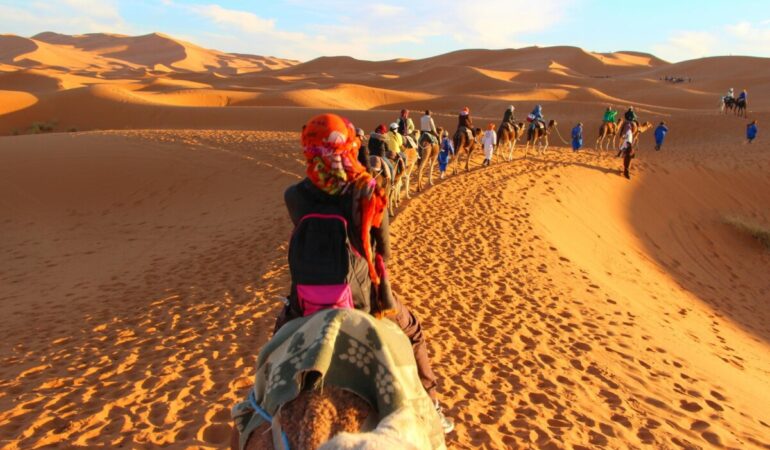
The hottest month. Merzouga daytime temperatures regularly reach 42–46°C. Walking in the dunes at midday is genuinely risky without serious hydration and sun protection. The camel ride and desert camp experience are still excellent in the early morning and evening — the desert at dawn and dusk in July is extraordinarily beautiful — but the middle of the day requires staying indoors or in air-conditioning. Only recommended for experienced hot-weather travelers.
August
Similar to July. The mountain regions (Todra Gorge, Dades Valley, High Atlas) are actually very pleasant in August — warm and clear with hiking conditions — but the desert heat remains intense. Budget travelers often find good rates in August as mainstream tourism peaks on the coast.
September
The best single month for a Morocco desert tour. Summer heat begins to ease; the desert returns to perfect conditions (28–34°C by day, 15–18°C by night); crowds are building but haven’t yet hit October peak. The light is extraordinary — golden and low — and the contrast between the dunes and the sky is at its most photogenic. Book early if you’re planning a September trip.
October
Excellent. The peak of the autumn high season — particularly popular with European travelers on autumn breaks. Desert conditions are ideal (25–30°C by day). The main disadvantage is that popular camps and riads can be full in mid-October, so early booking is essential. If you can be flexible, early or late October avoids the very busiest weeks.
November
Still good. Temperatures cooling noticeably, particularly at night in the desert (10–14°C) and in the mountains. The high Atlas road is generally clear of snow. Crowds are thinning and rates improve. A comfortable and atmospheric month with the landscape beginning its winter palette of muted gold and grey.
December
Cold at altitude and at night in the desert (5–10°C nights in Merzouga) but beautiful. Christmas and New Year see a spike in visitors, particularly to the desert camps, which makes late December actually quite busy and expensive. Mid-December is quieter and the desert light is exceptional. Snowfall on the Tizi n’Tichka adds drama to the mountain crossing.
Special Considerations
The Rose Festival (Valley of Roses): Held in early May in Kelaat M’Gouna. If you’re visiting in spring, timing your Morocco tour to coincide with the festival adds a genuinely special cultural dimension.
Ramadan: The timing shifts each year (based on the Islamic lunar calendar). During Ramadan, many restaurants in smaller towns operate reduced hours during the day, and the overall atmosphere is different — quieter and more inward during daylight, then explosive and joyful after sunset for Iftar. It’s a fascinating time to visit for cultural immersion but requires slightly more flexibility in planning.
School holidays: Moroccan domestic tourism peaks during school holidays (particularly July–August and mid-year breaks), which affects crowd levels at major sites like Ait Ben Haddou and Fes medina.
Final Recommendation
The ideal months for a Morocco desert tour are March to May (spring) and September to November (autumn). These windows offer the most comfortable temperatures, the best desert light, manageable crowd levels, and the full range of landscapes at their most beautiful.
If you can only travel in winter, December to February is still rewarding — especially for photographers and solitude-seekers. If you can only travel in summer, focus on the mountains and cities rather than the desert midday hours, and embrace early-morning and evening desert activities.
Whenever you go, Morocco will exceed your expectations. Explore our full range of Morocco desert tours from Marrakech and find the itinerary that fits your dates.